
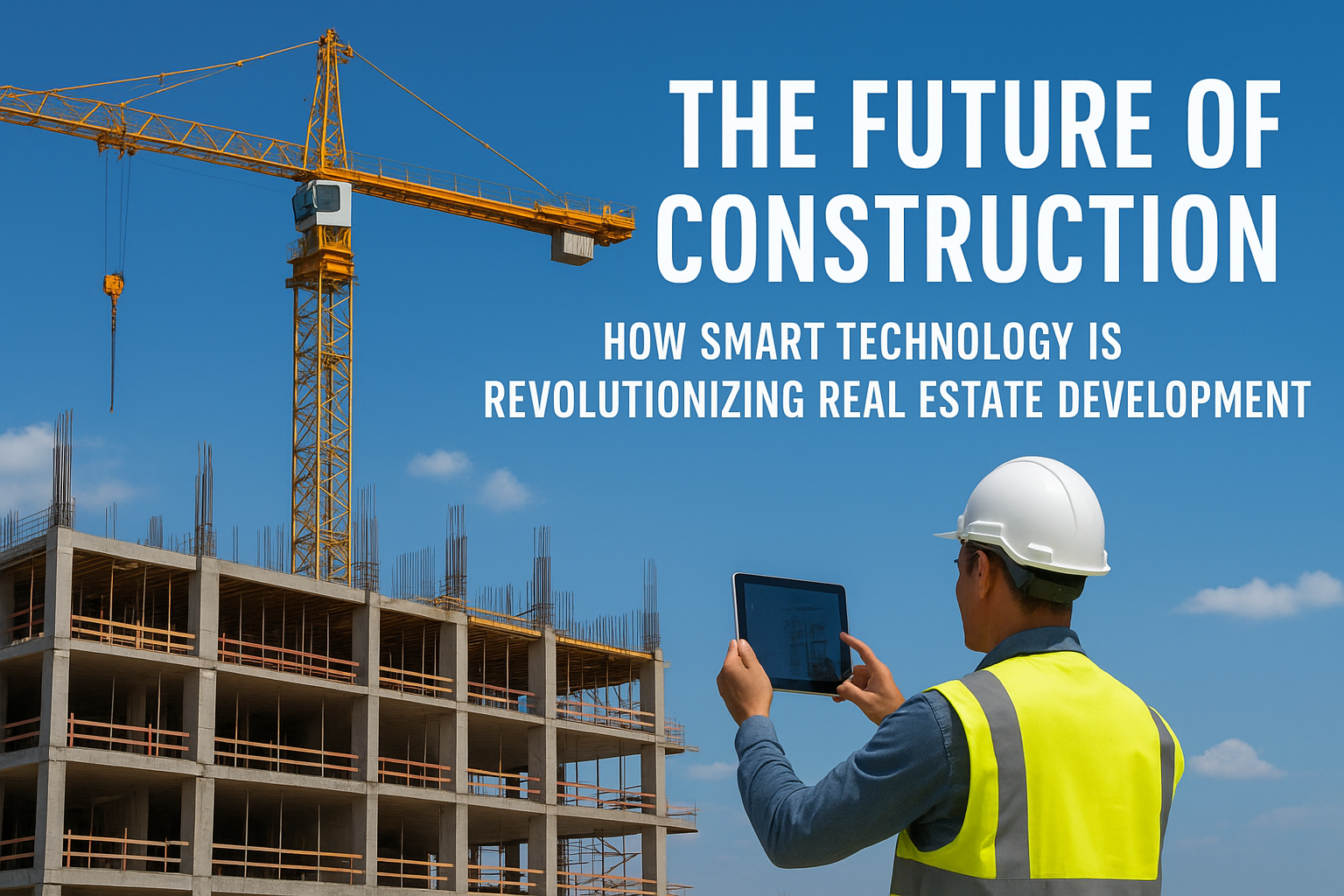
The construction industry has always been the backbone of real estate development, shaping skylines and communities alike. But today, it’s undergoing a remarkable transformation. With smart technology, innovative materials, and data-driven management, construction is no longer just about bricks and mortar—it’s about precision, efficiency, and sustainability.
Smart Construction Technology
From drones and 3D modeling to AI-driven project management software, technology is enabling construction teams to plan, monitor, and execute projects more accurately than ever. Drones can survey large sites in hours instead of days, while 3D Building Information Modeling (BIM) allows developers to visualize every stage of a project before the first brick is laid.
Efficiency and Cost Savings
Modern construction technology isn’t just impressive—it’s practical. Automated machinery and robotics reduce manual labor, shorten project timelines, and minimize errors. By predicting potential issues before they occur, developers can save significant costs and avoid delays, making real estate investments more profitable.
Sustainability in Real Estate
Sustainable construction has become more than a trend—it’s a necessity. Green building materials, energy-efficient designs, and smart waste management practices help reduce environmental impact. Investors and buyers are increasingly looking for eco-friendly buildings that are not only durable but also cost-effective to operate.
Enhanced Safety and Quality Control
Safety is paramount in construction. IoT-enabled sensors and wearable devices track worker safety in real-time, while AI algorithms detect potential hazards before they cause accidents. At the same time, automated quality inspections ensure every part of the building meets strict standards, resulting in higher construction quality and long-term reliability.
The Role of Real Estate Developers
For real estate developers, embracing smart construction technology is crucial. It enables them to deliver projects faster, at lower costs, and with superior quality. Properties built with modern techniques attract higher market value and appeal to a new generation of buyers who prioritize efficiency, sustainability, and modern design.
Conclusion
The construction industry is evolving at an unprecedented pace. Smart technology is no longer optional—it’s the future. By integrating advanced tools, sustainable practices, and data-driven management, construction companies and real estate developers can build safer, more efficient, and higher-quality projects that redefine the way we live and work.
Leave A Comment